 800-200-3000
Key Takeaways
- Legal directories function as both review platforms and search results, often outranking law firm websites for branded and practice-area queries.
- Avvo, Martindale-Hubbell, Super Lawyers, and Google Business Profile drive the highest share of consumer attention during attorney research and should be claimed before any paid placements are considered.
- Free profile claims always come first. Paid premium placements only make sense after free profiles are fully optimized with bios, practice areas, photos, and a baseline of reviews.
- Review counts and recency now influence directory rankings and Google’s local pack at the same time, making consistent review generation a multi-platform priority rather than a single-channel tactic. State bar ethics rules apply to directory advertising and review responses. Attorneys should confirm their jurisdiction’s rules before drafting public review replies.
- Most law firms get a better return from optimizing three to five legal directories well than from claiming every directory available.
Why Legal Directories Still Matter in 2026
Legal directories still matter because they sit between your website and the search results page for almost every attorney query a prospective client types into Google. A potential client searching for “personal injury lawyer near me” or “family law attorney in [city]” routinely sees an Avvo profile, a Super Lawyers listing, a Google Business Profile, and a Justia bio before they ever click through to a law firm’s own site.
According to the BrightLocal Local Consumer Review Survey 2024, about 75% of consumers always or regularly read online reviews when researching local businesses, and legal services consistently rank among the categories where consumers consult the most sources before making contact.
The Clio Legal Trends Report 2025 likewise highlights that online research is now a default step in the hiring process for new legal clients, with directory listings, Google reviews, and law firm websites all competing for that attention.
For law firms, that translates to three practical realities:
- Directories influence whether your firm appears at all. A claimed, well-optimized profile is a precondition for ranking inside platforms like Avvo and Super Lawyers, and those platform rankings spill over into Google’s organic results.
- Reviews on directories shape conversion. Even a prospect who reaches your website often opens a new tab to check your reviews on Google, or Avvo, before scheduling a call.
- Inconsistent profiles erode trust. Mismatched practice areas, outdated photos, or stale contact details across directories signal that a firm is not paying attention, which is the last thing a prospective client wants to see in counsel.
For a deeper look at how directory presence fits into a complete reputation strategy, see our pillar guide on reputation management for lawyers.
How We Ranked These Legal Directories
We ranked these legal directories on four criteria that align with how law firms actually decide where to invest their time and budget: cost, claims process, review impact, and SEO value. Each profile below explains how the directory scores on those four dimensions, and the comparison table further down lets you scan all ten at once.
The four criteria:
- Cost. What does it take to be present on the directory? Most legitimate legal directories offer a free baseline profile, with optional paid upgrades.
- Claim process. How much effort is required to verify and optimize the listing? Some directories require active claiming and document verification; others auto-list licensed attorneys and require you to assert ownership.
- Review impact. How visible and influential are reviews on this platform? A handful of directories double as primary review platforms; others carry reviews but are read mainly for credentials.
- SEO value. How often do searches for an attorney’s name, practice area, or location surface this directory in Google results?
A platform can score well on one criterion and poorly on another. Avvo, for example, has high SEO value but a contentious history with attorneys over review removal. Super Lawyers carries strong third-party credibility but limited reach for newer attorneys. The point of the rankings below is not to crown a single best directory; it is to help you prioritize where to invest first.
The 10 Best Legal Directories for Lawyers in 2026
The 10 legal directories below are ranked roughly in order of overall impact for most U.S. law firms, weighing all four criteria together. Boutique firms in specialized practice areas may need to adjust the order based on where their prospective clients actually look.
1. Avvo
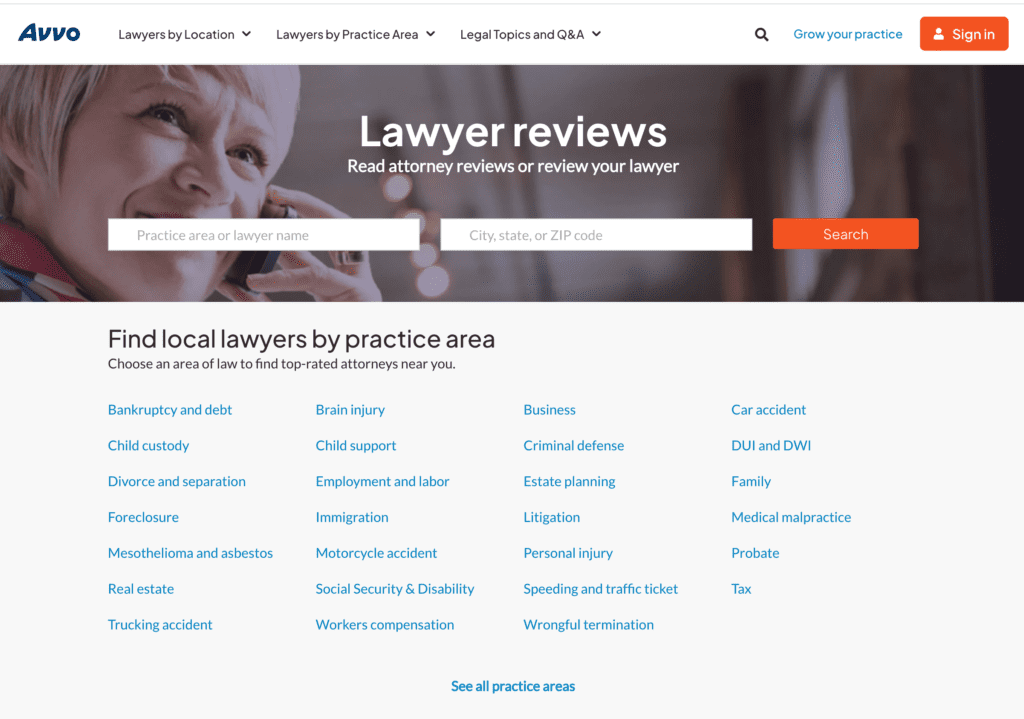
Avvo is the most-searched standalone legal directory in the United States, and the first profile most prospective clients see when they Google an attorney by name. Owned by Internet Brands (which also owns Martindale-Hubbell, Lawyers.com, and Nolo), Avvo combines a 1-to-10 rating algorithm, peer endorsements, client reviews, and Q&A activity into a single attorney profile.
- Cost: Free baseline profile for every licensed U.S. attorney. Paid “Avvo Pro” subscriptions add lead-generation features and profile customization. Avvo Advertising (PPC-style ads on competitor profiles) is a separate paid product.
- Claim process: Avvo auto-creates profiles for licensed attorneys using state bar data. Attorneys claim their profile by verifying their identity through Avvo’s claim form.
- Review impact: High. Avvo client reviews appear in Google search results for attorney name queries and are visible to anyone evaluating the lawyer.
- SEO value: Very high. Avvo profiles routinely rank on page one of Google for attorney-name searches, often above the lawyer’s own website.
The most common Avvo concern from attorneys is the rating algorithm. The Avvo rating runs from 1.0 (Extreme Caution) to 10.0 (Superb), weighing factors like years of experience, disciplinary history, peer endorsements, publications, speaking engagements, and client reviews.
If a fake or improper review appears on a profile, attorneys can flag it through Avvo’s content guidelines process. Removal is not guaranteed, and Avvo evaluates each flag against its stated policy.
2. Martindale-Hubbell
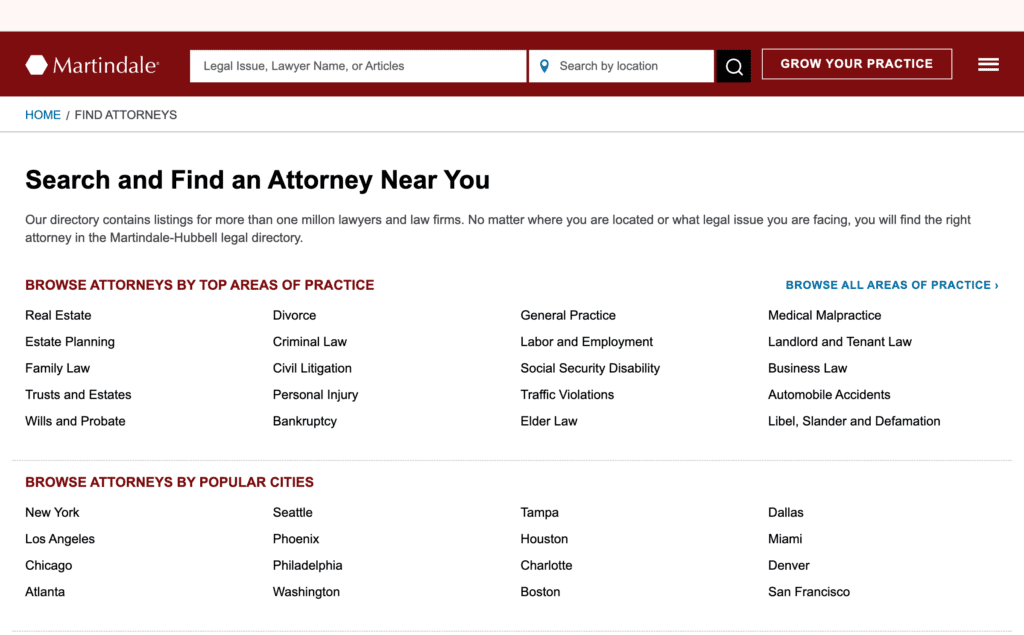
Martindale-Hubbell is the oldest legal directory in the U.S. and remains the leading source of peer-reviewed attorney credentials. Founded in 1868 and now owned by Internet Brands, Martindale-Hubbell is best known for its AV Preeminent rating, which marks the top tier of attorneys based on confidential peer reviews from other lawyers and judges.
- Cost: Free profile available for every licensed attorney. Paid premium memberships add enhanced visibility, lead generation, and credentialed badge usage.
- Claim process: Most licensed U.S. attorneys are already listed in Martindale’s database. Claiming a profile requires verifying identity and bar membership.
- Review impact: Moderate. Client reviews are accepted, but Martindale’s reputation centers on peer reviews from other attorneys and judges, not consumer reviews.
- SEO value: High for credential queries. Martindale profiles frequently appear for attorney-name searches, especially when the AV badge is displayed.
The AV Preeminent rating is the marketing asset most firms care about. It signals top-tier ethical standing and legal ability based on peer review, and it is widely recognized by referral sources, judges, and corporate clients.
3. Super Lawyers
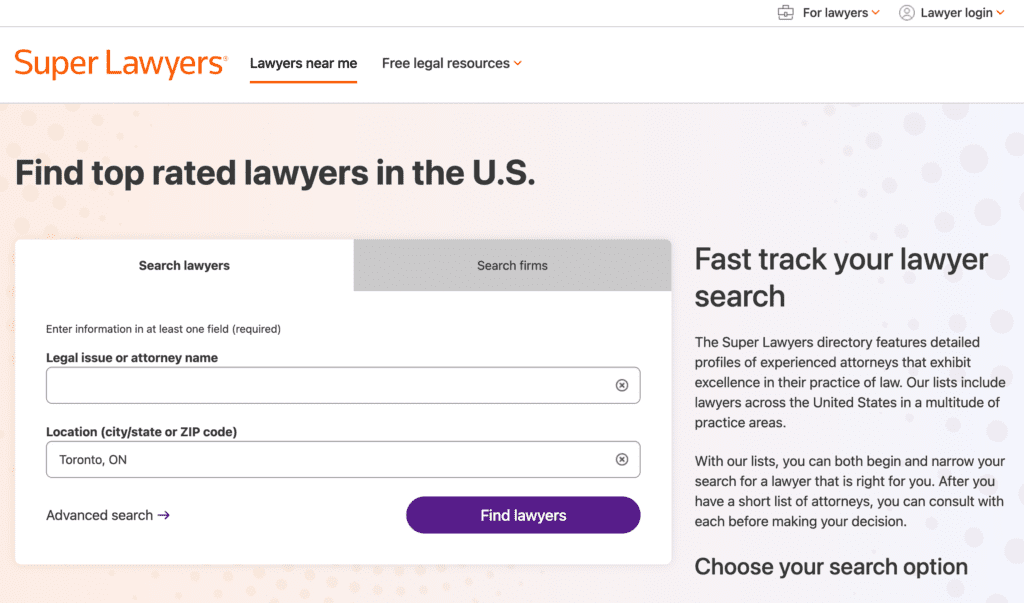
Super Lawyers is a selective, peer-nominated rating service that publishes annual lists of the top attorneys in each state and practice area. Owned by Thomson Reuters, Super Lawyers selects no more than 5% of attorneys in each state for the main list and no more than 2.5% for the Rising Stars list (attorneys under 40 or in practice for fewer than 10 years), per their published selection methodology.
- Cost: Selection is free and cannot be purchased. Selected attorneys can buy enhanced profiles, badges, and advertising placements.
- Claim process: Selection is by peer nomination and independent research by Super Lawyers’ editorial team. Attorneys cannot self-nominate for the rating itself, but they can claim and customize their profile after being selected.
- Review impact: Low. Super Lawyers does not host consumer reviews; the platform’s credibility comes from the editorial selection process.
- SEO value: High for “best [practice area] lawyer in [city]” queries. Super Lawyers list pages frequently rank in the local pack-adjacent results.
The most important thing to understand about Super Lawyers is that the badge itself is the marketing asset. Firms that win selection should display the badge prominently on their website, email signatures, and other directory profiles where allowed by platform terms.
4. Google Business Profile
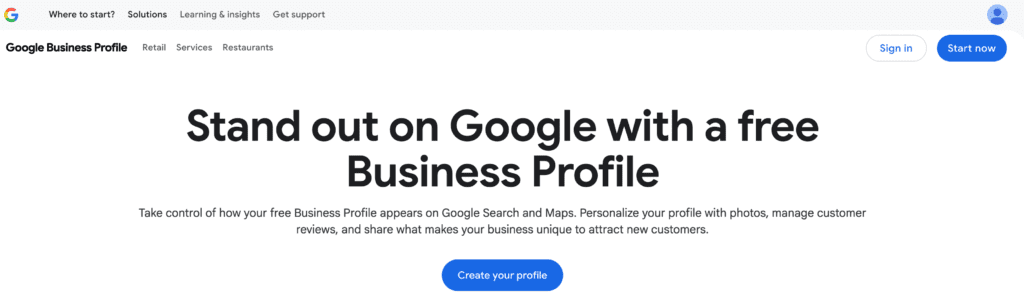
Google Business Profile is the most important free local marketing asset for any law firm with a physical office. It controls how the firm appears in Google Maps results, the local pack of three businesses shown above standard organic results, and Google’s review interface.
- Cost: Free. There are no paid upgrades inside Google Business Profile itself, though firms can pair it with Google Local Services Ads.
- Claim process: Law firms claim their profile by verifying ownership through Google’s verification options (postcard, phone, email, or video, depending on category and eligibility).
- Review impact: Very high. Google reviews influence local pack rankings and are the most visible review signal for any consumer search.
- SEO value: Very high. For “lawyer near me” and “[practice area] [city]” queries, a well-optimized Google Business Profile often outperforms the firm’s own website.
Google Business Profile is also the platform where ethical review response rules under state bar guidance most often come into play, since responses are public and may inadvertently disclose confidential client information.
5. Lawyers.com
Lawyers.com is a consumer-oriented legal directory operated by Internet Brands and closely integrated with Martindale-Hubbell. It targets non-lawyer audiences and emphasizes practice-area content, attorney bios, and consumer-friendly profile presentation.
- Cost: Free baseline profile. Paid premium memberships add enhanced visibility and lead-gen tools, often bundled with Martindale-Hubbell premium options.
- Claim process: Profiles auto-populate from bar data and are claimed using the same verification process as Martindale.
- Review impact: Moderate. Lawyers.com supports client reviews but is read mainly as a credentials-and-content directory rather than a primary review platform.
- SEO value: Moderate to high. Lawyers.com pages rank for many practice areas and locational queries and benefit from Internet Brands’ broader legal network.
Because Lawyers.com, Martindale, Avvo, and Nolo are all owned by Internet Brands, attorneys often discover that claiming one profile prompts an upsell across the network. Treat each platform on its own merits and avoid bundled paid placements unless the firm has fully optimized the free profiles first.
6. FindLaw
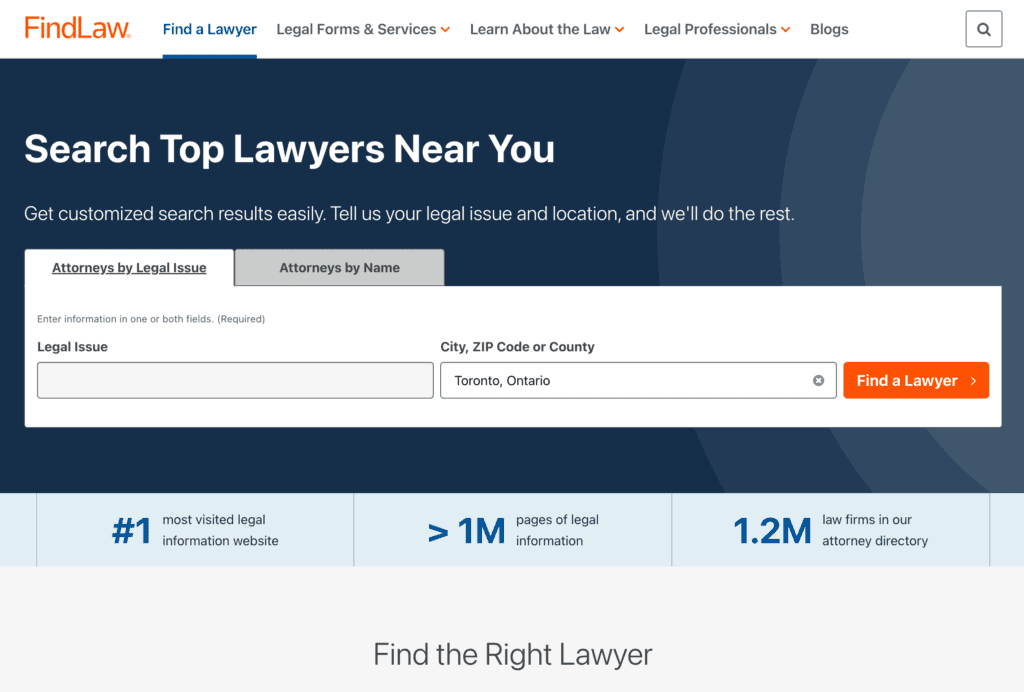
FindLaw is a Thomson Reuters-owned legal directory and content network with deep practice-area pages and a directory built for consumer research. FindLaw is one of the few legal directories that pairs an attorney directory with a large content library, which lifts the SEO authority of profiles hosted on the platform.
- Cost: Free baseline profile. Paid lead-generation programs (FindLaw Lawyer Marketing) add website services, PPC management, and premium directory placements.
- Claim process: Attorneys claim a profile by registering and verifying their bar membership through FindLaw’s lawyer portal.
- Review impact: Low to moderate. FindLaw accepts client reviews but is not a primary review destination for most consumers.
- SEO value: High. FindLaw pages frequently rank for practice-area content queries that funnel into directory results.
FindLaw paid services have a wider scope than most legal directories, ranging from individual profile upgrades to fully managed law firm websites. Evaluate the upgrade options as separate purchases, not as a single bundle.
7. Justia
Justia is a free legal information and directory site widely used by consumers and legal professionals alike. Founded by former FindLaw co-founder Tim Stanley, Justia hosts a free attorney directory, legal case law databases, BlawgSearch (a legal blog index), and other resources.
- Cost: Free directory listing. Justia also offers paid services for law firm websites and marketing through its sister company, Justia Marketing.
- Claim process: Attorneys can create or claim a profile through Justia’s lawyer registration process.
- Review impact: Low. Justia does not emphasize consumer reviews.
- SEO value: Moderate. Justia profile pages rank well for some attorney-name queries and tend to age into stronger rankings over time, given the platform’s overall domain authority.
For solo and small-firm attorneys with a limited marketing budget, Justia is one of the simplest free profiles to maintain and tends to compound in value over years.
8. Nolo
Nolo is best known as a legal self-help publisher, and its attorney directory complements that content audience. Like Avvo, Martindale, and Lawyers.com, Nolo is owned by Internet Brands. The directory funnels traffic from Nolo’s extensive library of legal guides to attorneys who match the user’s practice area and location.
- Cost: Free baseline profile. Nolo’s paid lead-generation product places attorneys in front of users reading related guides.
- Claim process: Profiles can be created and claimed through Nolo’s attorney enrollment process.
- Review impact: Low. Nolo does not host consumer reviews as a primary feature.
- SEO value: Moderate. Nolo’s domain authority comes from its content library more than its directory pages, but profiles still gain visibility from the broader site.
Nolo works best for practice areas where Nolo’s content library is strong, such as bankruptcy, estate planning, small business, and family law.
9. State Bar Directories
Every U.S. state bar association maintains a public directory of licensed attorneys, and those directories rank surprisingly well in Google for name-based queries. State bar directories are the official source of an attorney’s licensure status, disciplinary history (in most states), and contact information.
- Cost: Free. Inclusion is automatic for any licensed attorney.
- Claim process: No claim required. Attorneys update their listed information through the bar’s standard membership portal.
- Review impact: None. State bars do not host consumer reviews.
- SEO value: High for attorney-name and disciplinary-record queries. State bar listings often outrank an attorney’s own website for the lawyer’s name.
The reason state bar directories matter for reputation management is that they are usually the most trusted result on page one of an attorney-name search. Verify that the contact information, practice areas, and firm affiliation on the bar listing are correct, and address any errors with the bar membership office directly. State-specific platforms like the New York Unified Court System attorney directory or the California State Bar member directory operate the same way.
Legal Directory Comparison Table
Here is the full comparison across cost, claim process, review impact, and SEO value:
| Directory | Cost (baseline) | Claim Process | Review Impact | SEO Value |
|---|---|---|---|---|
| Avvo | Free, paid Pro available | Auto-listed, claim required | Very high | Very high |
| Martindale-Hubbell | Free, paid premium | Auto-listed, claim required | Moderate (peer-led) | High |
| Super Lawyers | Free if selected | Selection by editorial team | Low (no consumer reviews) | High |
| Google Business Profile | Free | Verification required | Very high | Very high |
| Lawyers.com | Free, paid premium | Auto-listed, claim required | Moderate | Moderate to high |
| FindLaw | Free, paid lead-gen | Claim required | Low to moderate | High |
| Justia | Free | Self-registration | Low | Moderate |
| Nolo | Free, paid lead-gen | Claim required | Low | Moderate |
| State bar directories | Free (automatic) | No claim needed | None | High |
How to Prioritize Your Legal Directory Strategy
Most law firms should prioritize directories in this order: Google Business Profile, Avvo, the state bar listing, Martindale-Hubbell, and then everything else. That order reflects where prospective clients actually look first and where investment compounds fastest.
A practical sequence for a solo attorney or small firm:
- Claim and verify Google Business Profile first. Add complete contact information, practice areas as services, hours, photos of the office and team, and a posting cadence of at least one Google Post per month. Begin requesting reviews from satisfied clients in compliance with state bar rules.
- Claim and complete the Avvo profile. Add a full bio, every practice area, peer endorsements requests, and the firm’s published work. Avvo’s rating responds over time to a complete profile and active engagement.
- Verify the state bar listing. Confirm the contact information, firm name, and listed practice areas. Correct any errors through the bar’s membership portal.
- Claim Martindale-Hubbell and Lawyers.com. These often share a single claim process under Internet Brands. Decline the upsell to paid premium until the free profile is fully populated.
- Add FindLaw, Justia, and Nolo profiles. Each takes 15 to 30 minutes to claim and complete. Treat them as long-term assets rather than immediate traffic drivers.
- Consider Super Lawyers and other selective directories last. Selection happens on Super Lawyers’ timetable, not yours. Focus on the platforms you can directly control first.
A firm marketing director with a budget should pair this sequence with a structured review request workflow, response policy review with the firm’s general counsel or bar ethics counsel, and a monthly profile audit across all claimed directories. For a complete review management approach, see our business review management services page.
Common Mistakes Law Firms Make on Legal Directories
The five most common mistakes law firms make on legal directories are inconsistent information, ignoring reviews, paying for placements before optimizing free profiles, responding to negative reviews without checking ethics rules, and abandoning profiles after the initial setup.
-
- Inconsistent name, address, and phone number across directories. Google reads consistent NAP data across directories as a trust signal for local rankings. Mismatched information across Google, Avvo, and Martindale erodes that signal.
- Ignoring reviews and review requests. Profiles without recent reviews lose visibility on most directory platforms. A monthly cadence of review requests to satisfied clients keeps the profile active.
- Paying for premium placements before the free profile is complete. Premium upgrades cannot compensate for an empty bio, no photo, or missing practice areas. Complete the free profile first.
- Responding to negative reviews without checking state bar rules. ABA Formal Opinion 496 and most state bar opinions limit what attorneys can say in public review responses, particularly around confirming or denying that a reviewer is a client. A template response cleared by the firm’s ethics counsel is safer than a one-off public reply.
- Setting up a profile and never touching it again. Directory pages age, content goes stale, and rankings respond to recency. Quarterly or biannual reviews of every claimed profile keep the firm’s presence current.
For firms facing a more serious reputation issue (a wave of fake reviews, a damaging article ranking alongside directory listings, or a competitor sabotage situation), our team handles the full scope through our law firm reputation management service.
Frequently Asked Questions
What is the best legal directory for lawyers in 2026?
The best legal directory for most law firms in 2026 is Google Business Profile, followed closely by Avvo. Google Business Profile controls local pack visibility and review impact, while Avvo ranks on page one of Google for most attorney-name searches and carries the most-read consumer reviews.
Are paid legal directories worth it for solo attorneys?
Paid legal directory placements are worth it for solo attorneys only after every free profile is fully optimized. The most common pattern is that attorneys overspend on paid Avvo or Martindale upgrades before adding a complete bio, practice areas, and active review generation to their free profiles. Free first, paid only when the free version is no longer producing incremental gains.
Can law firms remove negative reviews from legal directories?
Law firms can request removal of reviews that violate a directory’s content guidelines, but no platform guarantees removal. Avvo, Google, and Martindale all have published policies on review removal, and each evaluates requests on its own terms. Defamation law may apply in narrow cases, but attorneys should consult separate counsel before pursuing legal action against a reviewer.
How many legal directories should a law firm be listed on?
Most law firms should aim for complete, claimed profiles on five to eight legal directories rather than chasing every directory available. The diminishing returns are real, and a smaller set of fully optimized profiles outperforms a long list of empty or outdated listings.
Do bar ethics rules apply to legal directory profiles and reviews?
Yes. Bar ethics rules apply to legal directory profiles, advertising claims, and review responses. Specific rules vary by state, and ABA Formal Opinion 496 provides nationally-relevant guidance on the duty of confidentiality when responding to negative reviews. Attorneys should confirm their jurisdiction’s rules before responding publicly to a critical review.
 800-200-3000
 Rated #1 by Newsweek
 4.9/5 Trustpilot
 100% Confidential