 by Lindsay Pietroluongo
If you’re wondering, “How does Google rank search results?” this article discusses the 5 key ranking signals used to return content related to queries.
Have you ever been curious about what determines the order of search engine results? Google is able to sift through hundreds of billions of content pieces in less than one second, delivering users the most helpful and relevant results related to their search term.
How does Google do that, though?
To give you a broad overview, this is how Google rankings work: Google Search has algorithms that look at a variety of ranking factors and signals, such as:
- The words used in the search query
- Expertise level of sources
- Web page relevance and usability
- Your location and other search engine settings
How important each factor is in rankings depends on the search term itself. For example, if a user searches for current news, how fresh the content is will play a large role in the results that Google selects. This is different from, say, the dictionary definition of the term searched for, which Google is able to determine is not relevant to the specific search query.
In this article, we’ll discuss the different Google ranking factors used to choose relevant results for a given search query.
If you need help improving your Google rankings for target keywords, get in touch with NetReputation. We have information and services to help you protect your digital presence. Fill out the contact form below for a free consultation.
Request a Free Consultation
5 Key Search Signals Google Uses To Rank Relevant Websites
Let’s break down Google’s five main search signals to find out how they play a role in the results you see on the search engine results page (SERP). Note that while the Google ranking algorithm includes hundreds of factors, these are the five most important areas to consider when creating content.
Meaning
The first of the five Google ranking factors is meaning. Google has to figure out why you’re looking for what you’re looking for. This is called “search intent” or “user intent.”
According to Google, figuring out the meaning behind search query words took more than five years to develop, and it’s able to improve results in more than 30% of searches.
In addition to determining your search intent, Google is able to:
- Recognize and correct spelling mistakes
- Consider synonyms that weren’t used in the search term
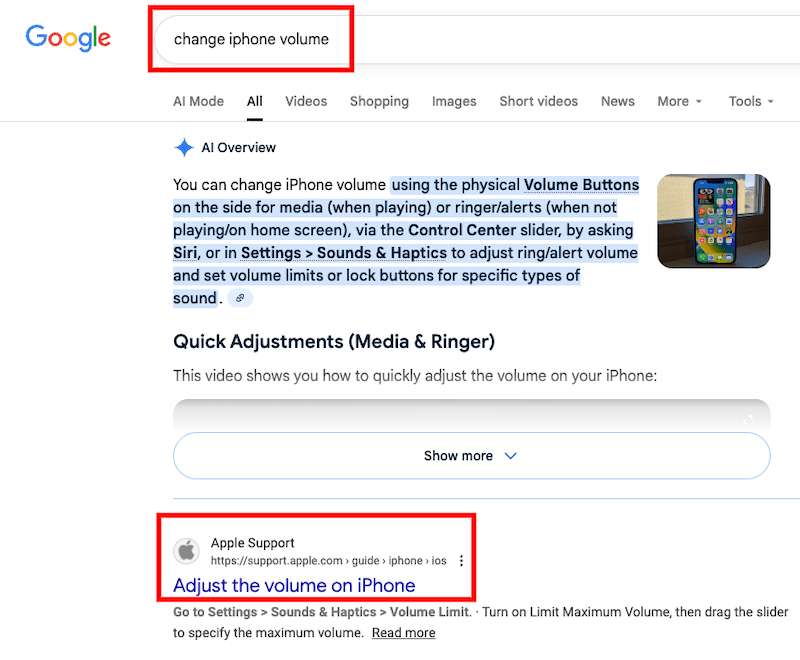
Here’s an example: If you search for “change iPhone volume,” Google can also pull results for “adjust iPhone volume.” That way, the content you see will match what you’re looking for, even if you didn’t use the exact wording the content creator used.
Do you know how your name or brand name shows up in search rankings? For help controlling the narrative online, get in touch with us at 844-461-3632 today.
Relevance
The second of the five Google ranking factors is relevance. Google analyzes content to determine if it’s relevant to what the searcher is looking for. At its most basic, this system works by checking if the search query and the content contain the same target keywords.
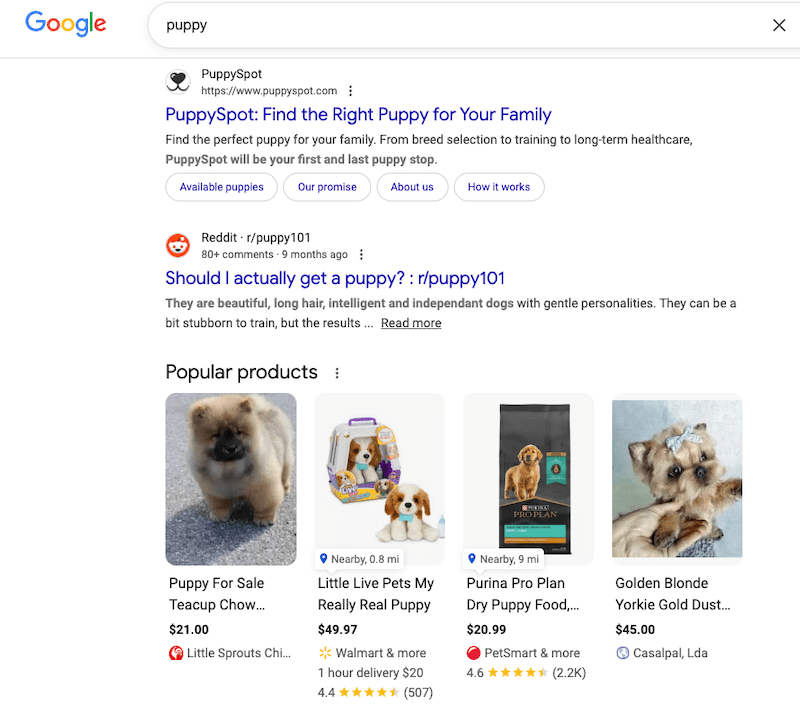
It doesn’t stop there, though. Google won’t simply rank a page because it shares a keyword with the search query. For example, if you enter “puppy” in Google, it’s not going to pull web pages that have “puppy” written over and over (which is why keyword stuffing doesn’t work anymore).
Instead, it’s going to look for pages that contain relevant content the user will likely want to see, such as local pet adoption centers, lists of dog breeds, information about grooming, etc.
Put another way, Google rewards pages that showcase topical authority. That means that sites and pages with in-depth coverage of a topic and that cover interconnected topic clusters will achieve higher search engine rankings.
Content Quality
Next up in Google’s five ranking factors is quality. Once Google has figured out the meaning of the query and the relevance of results, it considers the quality of online content. The highest quality and most helpful content is prioritized.
Google looks at signals that prove the content is authoritative, trustworthy and created with expertise. Quality backlinks are one way it does this — if highly regarded sites link back to content, that tells Google that the information can be trusted.
Usability

While not as important as the previous Google ranking factors, usability is still worth mentioning.
How usable the content is also factors into Google’s ranking process. According to Google, “When all other signals are relatively equal,” usability can impact how certain pieces of content perform.
For example, a mobile-friendly site may get more prominent placement than a non-mobile-friendly site if the other ranking factors are about the same.
Context
The last of the five ranking factors is context. Your specific use of the Google search engine also determines the search results and Google rankings you’ll see. Ranking factors include:
- Your language and location
- Google search history
- Search settings
For example, if you’re located in New York and search for “football,” you’ll likely see Google search results about American football and New York teams. However, if you’re in Scotland and search “football,” Google will rank search results about soccer and the Scottish Football Association.
Additionally, Google can tell if you’ve visited a web page several times before, and it pushes those pages toward the top of results. However, if you search for the same query multiple times, Google may decide to show you different results so you can explore new related content.
At NetReputation, we work with individuals and businesses to help them build and take control of their online reputation, search engine presence and Google rankings. Give us a call at 844-461-3632 to learn more.
4 More Things To Know About Google Search Rankings and Search Algorithms
- Searching for common currents events topics, like company earnings, news coverage and sports scores, will turn up timely results with up-to-date information.
- Google is able to recognize when a query has a local search intent, such as when you search for restaurants. This way, locally based results will be returned first.
- The language you use to write your query is also the language that will be prioritized in the results. For example, if you enter a query in Spanish, you’ll see Spanish-language results.
- While Google results match your interests and queries, they’re not customized to characteristics like political party, race or religion.
How Does Google Rank Websites? Final Thoughts

To recap, Google determines which content to rank based on five main factors:
- Meaning
- Relevance
- Content quality
- Usability
- Context
If you care about how your brand content shows up online, it’s important to stay in-the-know about Google’s algorithm, as it frequently changes to improve search performance. Ultimately, Google’s main goal is to offer users value when they search for a term while protecting them from bad and low-quality results.
Do you need help improving the search results page for your name or branded keywords? NetReputation has SEO services, GEO services, content removal and more for individuals and businesses.
Call us at 844-461-3632 or fill out the contact form below to speak with an expert.