 by Lindsay Pietroluongo
The article answers the question, “What is the dark internet?” and discusses the dark web versus the deep web, legitimate ways the dark web works, and more.
Have you ever wondered what people are talking about when they discuss the dark internet? You’re not alone.
The terms “dark internet” and “dark web” get thrown around in cybersecurity warnings, news headlines and true crime documentaries, often with a sense of danger or mystery attached to them. But what exactly is the dark web? Is it illegal? Can you accidentally stumble upon it?
The truth is that the dark web is just a small, hidden part of the broader internet you use every day. It operates on encrypted networks that prioritize anonymity and privacy, which is why it’s often associated with criminal marketplaces and underground, taboo activities.
That doesn’t tell the whole story, though. The same technology that enables illicit transactions also protects journalists, researchers, whistleblowers and any individual who lives under strict government censorship.
Understanding the dark web requires separating fact from fiction. That includes distinguishing the dark web from the deep web, the latter being a much bigger portion of the internet that most of us use daily.
In this article, we’ll break down what the dark web actually is, how it works, its legitimate uses, and how to keep your personal information safe from bad actors.
NetReputation provides information and services to help you protect your digital presence. Call us at 844-461-3632 to learn more, or fill out the contact form below for a free consultation.
Request a Free Consultation
What Is the Dark Web?
The dark web is the part of the internet that’s hidden, can’t be accessed through basic web browsers, and isn’t indexed by standard search engines. Unlike the surface web, where you can find websites that are publicly searchable, the dark web is built on encrypted networks. These offer a high level of anonymity for website operators and users.
In order to enter the dark web, you need specialty software, namely anonymity-based browsers that route traffic through different servers located around the world. By doing this, IP addresses and other identifying information are masked. This makes it very difficult for a user’s activity to be traced back to them.
What Is the Tor Browser?
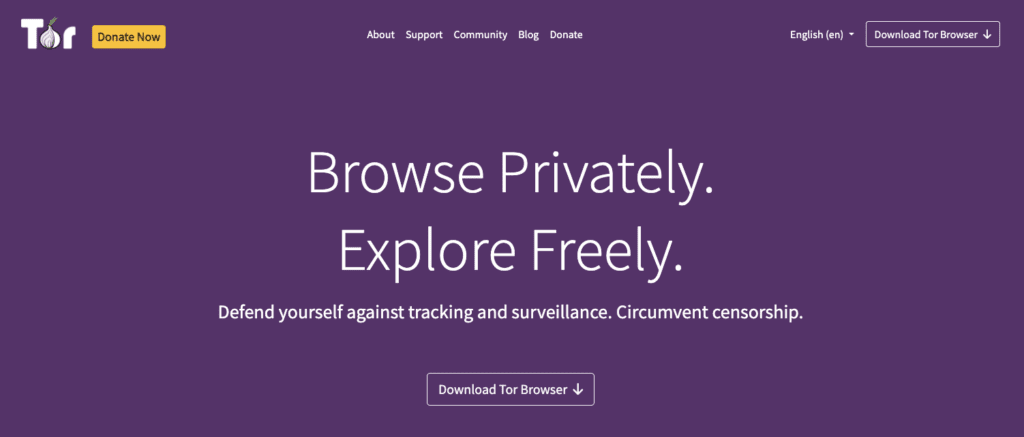
The Onion Browser (Tor) is a popular privacy-focused network that’s designed to anonymize internet activity. Instead of connecting you directly to a website, Tor routes traffic through multiple encrypted services. These services, called nodes, are located around the world. Since each node only knows the location of the previous and next nodes, it’s difficult to trace the origin of the connection.
How did the word “onion” make it into the dark web? It’s a reference to the layered routing process, which is compared to the layers of an onion. As information moves through the network, it is encrypted and decrypted in stages.
Onion sites are websites that operate in the Tor network. These websites use special web addresses that often end in .onion and don’t have access through a standard web browser or search engine. Since onion sites are hosted anonymously, the physical location of the server is concealed.
To ensure even more privacy when accessing the dark web (or the surface web or deep web), it’s best to use a VPN. In the U.S., more than 25% of internet users use a virtual private network (VPN) for some of their online activities. Worldwide, that percentage increases to more than 28%.
At NetReputation, we work with individuals and businesses to help them take control of their online safety. Give us a call at 844-461-3632 to learn more.
What Are Darknet Sites?
The term “darknet site” may refer to any dark website. However, it’s often reserved for marketplace sites associated with illegal activities. These include selling counterfeit items, drugs, hacking tools, stolen data or weapons. Darknet sites tend to resemble traditional e-commerce sites, including forums, listings and reviews. Commonly, these sites use cryptocurrency because it allows for anonymous, borderless, decentralized transactions.
What is the Deep and Dark Web?
Let’s start with a basic overview of how the dark web works compared to the deep web. While the dark and deep web are terms that are often used interchangeably, they’re actually distinct.
The deep web is all internet content that’s not indexed by search engines. This covers a broad range of everyday activities, such as:
- Bank portals
- Email inboxes
- Financial accounts
- Internal company tools
- Medical portals
- Password-protected dashboards
- Private databases
- Streaming accounts
- Subscription services
The deep web makes up a majority of the internet, and just about all of us use it every single day. Accessing the deep web is neither illegal nor suspicious. It’s simply the term that’s used for online content that requires login credentials, payment or other types of specific permissions — and that’s not included in public search results.
The dark web is a small part of the deep web. The dark web is always part of the deep web, but the deep web is not necessarily the dark web, depending on its use.
To access the dark web, you need specialized software that’s focused on anonymity, such as the Tor browser. The dark web runs on encrypted networks that conceal the identities and locations of users.
Are There Legitimate Uses for the Dark Web?

Dark web sites, dark web forums and other dark web networks are typically associated with criminal and illicit activities. However, there are instances where their uses are legitimate. Ultimately, people access the dark web to preserve their anonymity and privacy. This is essential for certain ethical purposes, such as:
- Academic and Cybersecurity Research: Academic researchers, as well as cybersecurity professionals and law enforcement agencies, use the dark web to monitor criminal trends, gather threat intelligence, study malware and ultimately enhance security practices.
- Facilitating Activism and Free Speech: In countries with heavy government censorship and surveillance, the only safe option for human rights activities and political dissidents is to use the dark web. This gives them a place to access independent news sources, communicate with one another, and organize when necessary.
- Personal Privacy: Most internet users want to protect their privacy. Some feel that their safest option is to use the dark web instead of trusting a standard web browser. This offers a way to browse the internet without worrying about data brokers collecting your information or online tracking via browser fingerprinting or other methods.
- Protecting Whistleblowers and Journalists: News organizations may operate dark web versions of their news sites or create a secure submission system on the dark web. They do this so that sources can safely leak sensitive information without fear of revealing their identity.
There are a number of reasons why internet users using a dark web browser may want to protect their freedom and security. Those reasons are not always related to illegal activity. The dark web can provide a safe space to communicate and share information away from censorship and surveillance.
3 Huge Risks of Using the Dark Web
- Even in countries where accessing the dark web is legal, it’s typically unregulated. By operating without any type of legal or regulatory oversight, it can be chaotic for buyers as well as sellers (and users as well as website owners).
- Files downloaded from the dark web may infect devices with ransomware, trojans or viruses.
- Scammers commonly set up fake storefronts on the dark web that are taken down overnight, after the site operator has gotten the victim’s money.
What Happens if Your Information Ends up on the Dark Web?

If you suspect or know that your information has surfaced on the dark web, it’s important to be aware of the risks so you can properly defend yourself. Business data and personal information often appear on the dark web as a result of data breaches, malware infections, phishing attacks and third-party vendor compromises. And the worst part is that victims aren’t always aware of what’s happened.
Once private data is exposed, it can be bought, sold or shared. Data affected may include:
- Email addresses
- Financial details
- Passwords
- Proprietary business data
Even if the original breach is minor, reused credentials can lead to account takeovers, financial fraud, identity theft or unauthorized access to private systems. Sometimes, leaked data is used in future attacks, too.
Dark Web Monitoring
Dark web monitoring tools are available to consumers as well as enterprises. They play an important role in detecting compromised data early by scanning illicit dark web marketplaces, underground forums and well-known breach repositories. These tools are able to identify exposed personal information, leaked credentials and stolen intellectual property before it’s exploited or ends up in public search results.
Detection alone isn’t enough, though. Once compromised data is identified, you may need to reset your credentials, secure impacted accounts, notify any affected parties, and set up additional security controls to prevent problems in the future.
You can take control of your online presence and stay safe on the internet. Call us at 844-461-3632 for more information.
FAQ About the Dark Internet
What is the dark web used for?
The dark web is used for illegal activities as well as legitimate ones. The reason why some users turn to the dark web for criminal reasons is that it’s anonymous. Black-market commerce, data breaches and fraud are just some of the criminal activities that circulate on the dark web. However, these uses only make up part of the dark web’s functions. Legitimate activities on the dark web include activists trying to operate under repressive regimes, journalists communicating with sources and whistleblowers exposing corporate wrongdoings. Essentially, the dark web supports any activity that you would want total anonymity and privacy for.
Can government agencies track you on the dark web?
Yes, government agencies can track you on the dark web. Even though the purpose of the dark web is to obscure the identities of users, those who use it are not 100% untraceable. Governments and law enforcement agencies can use advanced investigative techniques, such as malware deployment, traffic analysis and undercover operations to track and identify users. At times, internet service providers may even cooperate with agencies. However, according to the Be Structured Technology Group, this is usually reserved for violent criminals and terrorists. The average person trying to protect their privacy isn’t at much risk. By using a compromised device or interacting with a monitored service, users can be identified without realizing they’re exposing themselves. In this way, while the dark web does offer more privacy than the surface web, it doesn’t completely guarantee immunity.
Who are the main users of the dark web?
There are several types of dark web users. These include journalists, privacy advocates, and researchers. Additionally, individuals who live in countries with heavy censorship and surveillance may use the dark web. There are also some organizations that use monitoring tools on the dark web in order to track cyber threats, data leaks and intellectual property theft. Additionally, cybercriminals and people who want to access illicit marketplaces use the dark web to conduct illegal activity.
What happens when you look up the dark web?
Using a regular web browser to look up information about the dark web is common and harmless. However, to access the dark web, you’ll need to use specialized software. It’s also important to know that attempting to access the dark web exposes users to illegal material, malicious content and scams. Even if you’re exposed to these things passively, it could result in cybersecurity or legal issues.
Final Thoughts About Dark Web Activity and Safety
To recap, the primary characteristic of the dark web is that it operates on encrypted, decentralized networks that are purposely designed to protect anonymity. This structure makes the networks resistant to censorship while being difficult to track. (However, even though there’s much more privacy when using the dark web than the surface web, it’s not impossible to monitor.)
Dark web content ranges from archives of academic research and secure communication channels to illicit marketplaces and stolen data exchanges.
Ultimately, the dark internet is neither good nor bad — it’s a tool that has both positive and negative purposes. Like practically any type of technology, it can be used ethically, or it can be exploited for nefarious purposes.
What’s especially important to understand is that you don’t have to access the dark web in order to be affected and harmed by it. Credential leaks, data breaches and identity theft tend to surface on the dark web first. This typically happens long before victims realize their information has been compromised. This is why creating strong passwords, setting up multi-factor authentication, and actively monitoring your online data are critical.
Are you worried about your business or personal information appearing on the dark web? Do you want to strengthen your digital footprint before there’s an issue? Either way, early action is imperative.
At NetReputation, we help individuals and organizations manage, monitor and protect their online presence. Call us at 844-461-3632 or fill out the contact form below for a free consultation. With the right preparation, you can stay a step ahead of online threats.