 800-200-3000
A negative Healthgrades review can cost your practice new patients before they ever call your office. Healthgrades will only take a review down when it breaks the platform’s rules, so the first job is working out whether a specific review actually qualifies for removal or whether a different approach will protect your reputation faster.
In rater8’s 2025 patient survey, 84% of patients said they check online reviews before choosing a new provider, and 40% reported canceling or skipping an appointment after reading negative feedback. For a practice that depends on a steady flow of new patients, a single damaging review on a high-visibility platform is worth taking seriously.
This guide walks providers through what Healthgrades does and does not remove, how to flag a review the right way, and what to do when a review is here to stay.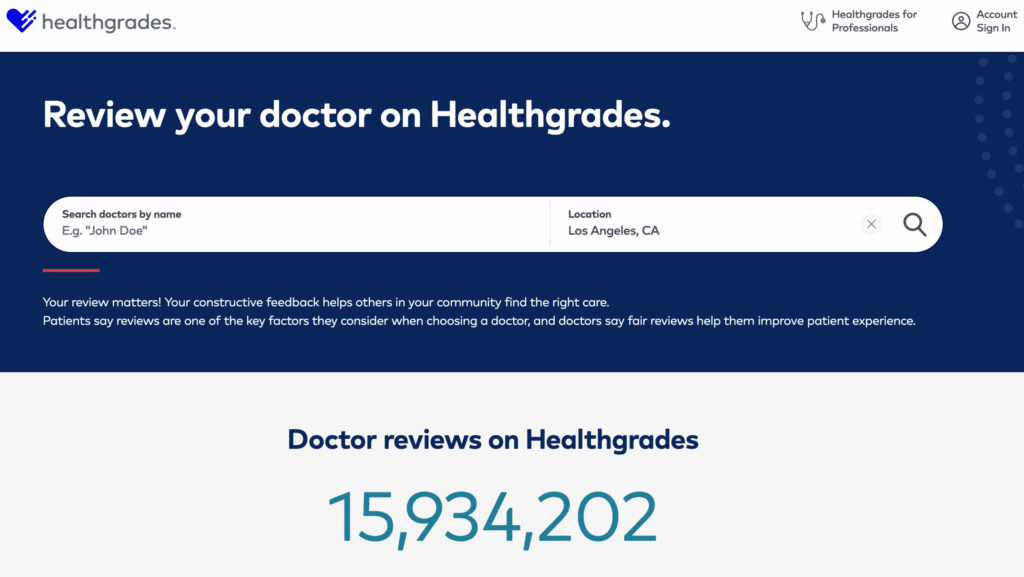
Key Takeaways
- Healthgrades removes a review only when it violates the platform’s Community Review Guidelines, such as defamation, profanity, personal attacks, or private information. A review that is simply unfavorable usually stays up.
- You report a review by flagging it on the provider profile and, if needed, escalating through Healthgrades support. Flagging triggers a re-review but does not guarantee removal.
- Healthgrades builds provider profiles from publicly available information and generally will not delete the profile of an actively practicing provider.
- When a guideline-compliant review cannot be removed, the realistic path is suppression, which pushes the review lower in search results, paired with a steady flow of authentic positive reviews.
- Responding to a patient review carries HIPAA obligations, because confirming that someone was your patient in a public reply can create a privacy problem.
- NetReputation does not provide legal advice. Consult an attorney before pursuing a defamation claim over a review.
Can You Remove a Negative Healthgrades Review?
You can request removal, but Healthgrades only takes down reviews that violate its Community Review Guidelines, and it will not remove a review just because it is negative or because you disagree with it. According to the Healthgrades Community Review Guidelines, the platform reserves the right to reject or remove content, and it retains sole discretion over how those rules are interpreted and enforced. In practice, that means a review has to cross a specific line before it becomes eligible for removal.
There is also a limit on what you can do with the profile itself. Healthgrades compiles provider profiles from publicly available information and, as a rule, does not delete the profile of a provider who is still practicing. You can claim your profile and keep the details accurate, but you cannot opt out of being listed.
When removal is not on the table, the alternative is suppression. Removal means the review is deleted at the source. Suppression means pushing the review and the page it sits on lower in search results so fewer prospective patients see it. Keeping those two outcomes separate matters because most review problems are solved through a combination of the two rather than removal alone.
What Kinds of Healthgrades Reviews Qualify for Removal?
Healthgrades removes reviews that break specific rules in its Community Review Guidelines, not reviews that are merely unfavorable. The table below maps the platform’s published rules to the situations a practice tends to run into.
| Healthgrades guideline | What it can look like in a patient review |
|---|---|
| Libelous or defamatory statements | A false factual claim, stated as fact, that you committed malpractice or billing fraud |
| Profanity, obscenity, or expressions of intolerance | Slurs or obscene language aimed at you or your staff |
| Name-calling or personal attacks | Insults about your character rather than a description of the visit |
| Private or personal information | A post that includes a staff member’s full name, home address, phone number, or email |
| Misleading, deceptive, or fraudulent content | A review from someone who was never a patient, or a competitor posing as one |
| Mentions of legal matters or proceedings | A review that references a lawsuit or board complaint |
| Personal website links or brand and pharmaceutical mentions | A review used to promote another practice or product |
A genuinely negative but rule-following review usually stays up. A complaint about long wait times, the cost of treatment, or dissatisfaction with a clinical outcome the patient actually experienced will typically remain on your profile, even when you believe it is unfair. Those reviews are better handled through a professional response and a stronger overall review profile, which the sections below cover.
How to Flag and Report a Healthgrades Review (Step by Step)
To report a Healthgrades review, flag it on the provider profile and, if it clearly violates the guidelines, follow up through Healthgrades support. A focused report that points to a specific rule is far more effective than a general objection that the review is unfair.
- Document the review first: Take dated screenshots and note the reviewer’s username and the posting date, in case the content is edited or disappears later.
- Identify the exact guideline it breaks: Match the review to a named rule from the table above. A flag tied to a specific violation gives the moderation team something concrete to act on.
- Flag the review on the profile: Open the options menu on the review itself and choose the flag or report option, which sends it back to Healthgrades for a second look.
- Escalate through Healthgrades support if needed: Use the Healthgrades contact form or email the reviews team at [email protected] with the profile link, the review text, and the guideline you believe it violates. Keep the message professional and factual.
- Be patient and follow up: Healthgrades evaluates flagged content at its own discretion, and the process can take time. Reporting does not guarantee removal, so a polite follow-up is reasonable, but repeated demands are not.
A word of caution before you act. If you are tempted to reply to the reviewer or contact them directly, remember that your practice is a HIPAA-covered entity. Publicly confirming that a person was your patient, even to correct the record, can create a privacy violation. Keep any public response generic and move specifics to a private channel.
What to Do When a Healthgrades Review Will Not Come Down
When a review follows the guidelines and Healthgrades declines to remove it, the realistic options are suppression and a stronger review profile, not deletion. This is where most practices actually recover, because a single critical review carries far less weight when it sits beneath dozens of recent, positive ones.
Three approaches work together here:
- Build authentic positive reviews: A steady stream of honest reviews from real patients raises your average rating and pushes a lone negative review down the page. Ask satisfied patients to share their experience, and do it ethically. The FTC’s 2024 rule on consumer reviews bans fake reviews and prohibits offering compensation in exchange for reviews that express a particular sentiment, so never buy, incentivize, or fabricate feedback.
- Suppress the negative result in search: When the review ranks for your name or practice in Google, the goal is to outrank it with higher-authority pages you control. This is the core of online reputation repair: publishing and strengthening positive content so the negative listing slips off the first page of results.
- Respond professionally where appropriate: Patients notice how providers handle criticism. In the same rater8 survey, 45% of patients said they value providers who actively respond to reviews. A calm, HIPAA-compliant reply that thanks the patient and invites them to continue the conversation privately can do more for your reputation than the review does against it.
If a review is genuinely defamatory or appears on multiple platforms, professional content removal services can pursue takedowns at the source. And because providers rarely face a problem on Healthgrades alone, the same patient who left a one-star Healthgrades review has often posted on Google too. The process for removing negative Google reviews follows similar rules, and a coordinated approach across both platforms protects your local search visibility.
How Providers Can Stay Ahead of Healthgrades Reviews
The most reliable protection against a single bad review is a claimed, accurate profile and a steady stream of authentic positive reviews. Practices that wait until a damaging review appears are always playing catch-up, while practices with a strong review base absorb the occasional negative comment without losing patients.
Start by claiming your Healthgrades profile and making sure your specialties, hours, insurance, and contact details are correct, since an incomplete profile both looks unprofessional and limits your visibility. Put a simple system in place to request reviews from patients after appointments, when their experience is fresh. Monitor your Healthgrades, and Google profiles regularly so you catch a problem review within days rather than months. Reviews on Healthgrades also feed the broader picture patients see, since AI search tools and directories increasingly pull provider reputation from sites like Healthgrades and Google, so a healthy profile pays off well beyond the platform itself.
For practices that want this handled end-to-end, our reputation management for healthcare providers program covers monitoring, review growth, response, and suppression across the sites patients check first.
When Legal Action Is Worth Considering
Legal action is a last resort, appropriate only when a review contains false statements of fact that may rise to defamation, not opinions or honest complaints about an experience. A court order can compel a platform to remove defamatory content, which is sometimes the only route when a review is both false and damaging.
The trade-offs are real. Lawsuits are slow and expensive, the legal threshold for defamation is high, and litigation can draw far more attention to a review than it would have received on its own. Before going down this path, weigh whether the review is truly a false statement of fact rather than a protected opinion.
NetReputation does not provide legal advice. The information here is general and is not a substitute for guidance from a qualified attorney. If you believe a review is defamatory, consult an attorney licensed in your state to assess your specific situation.
Frequently Asked Questions
Below are answers to some of the most common questions we receive from healthcare providers about removing a negative Healthgrades review.
Can a provider delete a Healthgrades review?
No. Only Healthgrades can remove a review, and only when it violates the Community Review Guidelines. Providers cannot delete reviews directly, and the platform does not remove reviews simply because they are negative.
How long does Healthgrades take to act on a flagged review?
Healthgrades does not publish a fixed timeline. Re-review happens at the platform’s discretion and can take anywhere from a few days to several weeks. Flagging a review starts the process but does not guarantee it will be removed.
Can I remove my Healthgrades profile?
Generally no, if you are an actively practicing provider. Healthgrades builds provider profiles from publicly available information and does not delete profiles for practicing providers. You can claim the profile and keep the information accurate.
Will responding to a review violate HIPAA?
It can. Because your practice is a HIPAA-covered entity, publicly confirming that someone was your patient, even while disputing their review, can be a privacy violation. Keep public replies generic and take any specifics to a private channel.
A review is from someone who was never my patient. Will Healthgrades remove it?
Possibly. Reviews that are fraudulent or misleading violate the guidelines, so flag the review and note that the reviewer was never a patient. Healthgrades still decides at its own discretion, so document anything that supports your case.
What is the difference between removing and suppressing a review?
Removal deletes the review at the source. Suppression pushes the review lower in search results by strengthening positive content you control. When removal is not possible, suppression is what protects the practice.
Protect Your Practice’s Reputation
If a damaging Healthgrades review is affecting your practice, NetReputation can assess the situation and lay out your removal and suppression options. Our team works across Healthgrades, Google, and the other sites patients check before booking, with strategies designed to protect the profile your practice depends on.
Call 800-200-3000 or request a free reputation analysis to get started.
 800-200-3000
 Rated #1 by Newsweek
 4.9/5 Trustpilot
 100% Confidential